
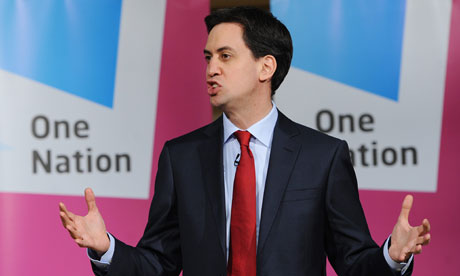
 Just two years before a general election, and already Ed Miliband’s ‘One Nation’ mantra whiffs of failure. It’s not hard to see why. As a slogan, it doesn’t have the oomph of a car insurance advert, let alone the ‘va va voom’ Labour needs to win.
But the real problem with One Nation Labour is that no one outside the leader’s academically-minded coterie has the slightest idea what it means. If Don Draper led the Labour Party, he’d have sacked his copywriters months ago.
It’s not that the broad political philosophies of One Nation Labour are wrong; at least, after hours of exhausting study, I don’t think they are. But they do look anti-populist to the point of parody. My favourite is the party’s vow to “challenge the ethics of neoliberalism”. Oh, yes – that’s real soap-box politics, right there.
How are voters meant to grasp something so essentially elitist? And why would they bother trying?
Tony Blair’s New Labour re-branding in 1994 was a success because it meant something. With one short word, he told Britain that the old Labour Party – the party of wildcat strikes, crippling taxation and high unemployment – was gone forever. One Nation Labour tells us nothing. It certainly isn’t going to contribute to a landslide victory in 2015.
The best political slogans are invariably contagious. They connect with the nation’s mood, crystallizing how people feel, or reflecting what they want.
Think of Barack Obama’s brilliant, ‘Yes we can’; or Bill Clinton’s simple, ‘It’s time to change America’.
In 1957, Harold Macmillan’s ‘You’ve never had it so good’ resonated with a nation finally emerging from its war-torn doldrums. Forty years later, Blair’s ‘Britain deserves better’, not only reflected the nation’s view, but helped create an unprecedented mood of political optimism.
Ultimately, ‘New Labour, New Britain’ worked because it made us a promise; it gave us hope.
Writing in last month’s New Statesman, Tony Blair said that Labour’s “guiding principle should be that we are the seekers after answers, not the repository for people’s anger.”
People do want politicians to feel their pain, and understand their irritation. But a sympathetic ear is not the same as a promise, and smart rejoinders don’t equate to action. If Ed Miliband has failed to connect with Britain, it’s because so far he doesn’t seem to understand the difference.
Negative messages can work, of course. The Conservatives infamous 1978 poster, ‘Labour isn’t working’, played on the fears of millions. In the end, it gave the Tories a majority of 44, cost Labour 50 seats, and helped keep the party out of power for 18 years. That’s some slogan.
Wacky attacks can work, too. In the 1964 presidential campaign, right-winger Barry Goldwater suffered a landslide defeat to Lyndon Johnson. The catchphrase, ‘In your guts, you know he’s nuts’, did him no favours.
But clever slogans don’t work if no one knows what a political party stands for – and have no quick way of finding out. Tap ‘One Nation Labour’ into Wikipedia’s search box and you’re redirected to an entry about Ed Miliband. At least it shows total ownership. But it’s astounding that the world’s largest encyclopedia – with entries on everything from nursery rhymes to defunct Welsh railway stations – has nothing on Labour’s eight-month-old re-branding project.
In the end, One Nation doesn’t work because it needs to be explained. And as every advertising guru knows, if you need to explain something to people, you really haven’t told them. Britain deserves better.
 Kath Raymond Hinton
Leave a comment