
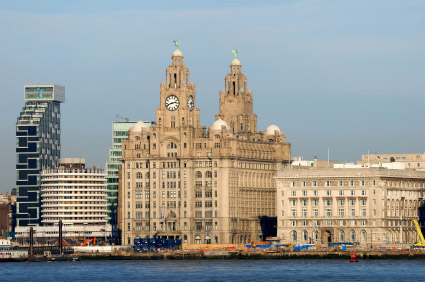
 In the Spring of 1979, five months before my twelfth birthday, Margaret Hilda Thatcher became Prime Minister.
On the same day, the Conservatives ousted Labour from the Liverpool Garston constituency, a residential, working-class area on the north bank of the Mersey. It was here, during the infamous, inglorious gravediggers’ strike that February, that 150 bodies had been stacked in a factory.
I lived in that constituency. Everyone I knew voted Labour. At least they had until that day. I’ve yet to meet a Scouser who admits voting Tory in 1979, but some of us must have done. The national swing from Labour to the Conservatives was 5.2%, the largest since Clement Attlee won the 1945 election. In Liverpool Garston, the swing was 6.5%.
Thatcher would, of course, never have won in 1979 without working-class votes. That May day, the Conservatives won almost half the votes of skilled manual workers, and around a third of trade-union votes.
These are the people Ed Miliband describes today as “hardworking families…who are worried about the economy, are seeing their living standards squeezed, and are worried about their kids.” They were desperate back then, too – under Labour.
The 1970s were brutal years, especially for Britain’s northern towns and cities. By the end of the decade, Liverpool, already in decline as its manufacturing industries and docks dwindled and failed, was on the edge of ruin. The Winter of Discontent – when strikes closed hospitals and schools, rubbish was piled on the streets and bodies went unburied – hit the city hard.
But worse was to come.
In the 1980s, the people of Liverpool were caught more than most in the crossfire of Thatcher’s war with the unions and the public sector.
We loathed her with a passion.
So I marched with my friends beneath a Militant banner; I supported the Labour Council’s ‘illegal’ budget of March 1984; and I cheered on the miners and the dockers and just about anyone who opposed the Conservatives.
I learned about socialism from my late father. A joiner, he spent his last years working for Liverpool city council. He despised ‘Maggie’, and believed the Conservatives could never understand the ‘real’ working men and women of Britain. I wonder if, by now, he might have reconsidered, although I doubt it. In the Blair years, I would occasionally wince at the thought of what my dad would have said about the wrong Labour crowd I’d got mixed up with.
As the years have passed, my feelings towards Margaret Thatcher have become more complicated. I abhor as much as ever the wreckage of her reign, the spoiled communities and the ruined families. But, grudgingly and gradually, I have allowed myself to consider another point of view.
At first, this thought was a deep secret, a sacrilege never to be uttered. But I believe it to be true: Margaret Thatcher helped make Britain a better place.
When Thatcher came to power, the country had already descended into a pit of economic and industrial chaos. Trade unions leaders were guilty of militant savagery. Successive governments, Conservative and Labour, were guilty of appeasement.
It didn’t take much to set things alight , and Thatcher created one almighty blaze.
Forest fires are pitiless things. They sweep away the bad and the good. But they foster new life, new beginnings.
I find it hard to forgive Margaret Thatcher’s indifference during the 1980s; the callous way she abandoned Liverpool and its people.
But the city is a different place now. It is a better, more optimistic place than the one I grew up in; better than had Labour clung to power in 1979.
Maybe Margaret Thatcher was our mighty fire.
This piece first appeared at http://www.speakerschair.com on 17th April 2013
 Kath Raymond Hinton